
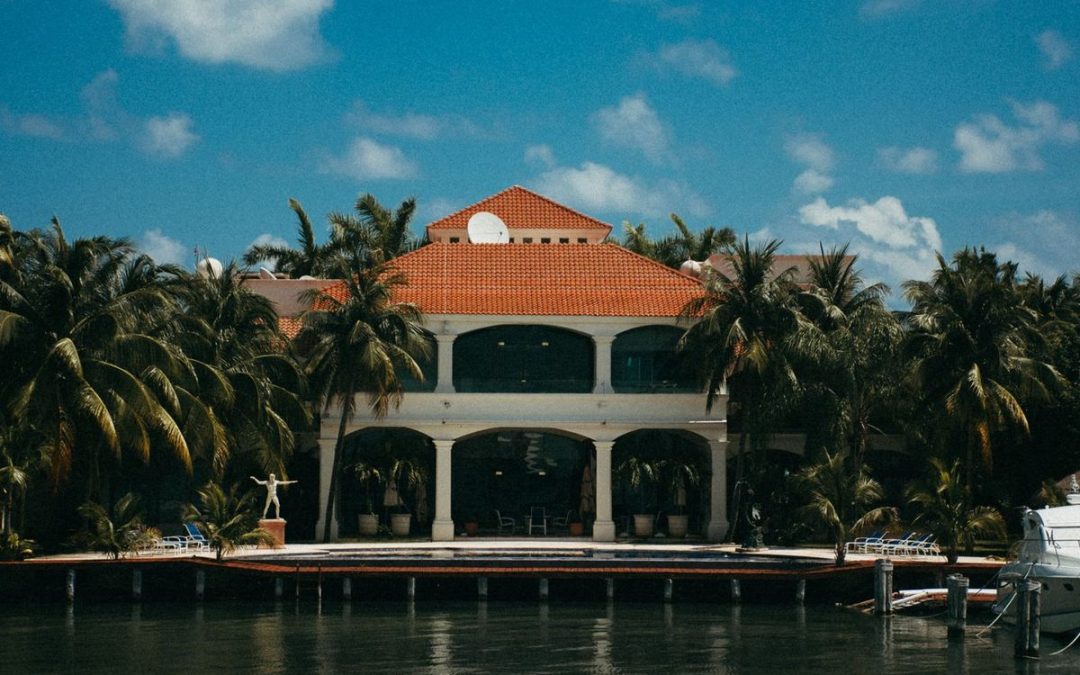
Few settings reward beautiful exterior finishes the way South Florida’s waterfront does, and few settings punish the wrong ones so quickly. Along the barrier islands and intracoastal shorelines of Palm Beach County, a home’s facade stands in the path of salt air, relentless sun, and storm-driven weather year round. That is why coastal exterior painting Palm Beach homeowners can rely on is never a matter of color alone. It is a matter of building a coating system engineered to survive a marine environment while protecting one of the most significant assets a family owns. For a luxury residence on Palm Beach Island, Jupiter Island, Manalapan, or Gulf Stream, the difference between an ordinary paint job and a marine-grade one is measured in years of durability and in preserved value.
The Coastal Threats Working Against Your Home
The same climate that makes waterfront living desirable is quietly hostile to conventional finishes. Four forces work in combination, and each accelerates the others.
- Salt air. Airborne salt carried inland from the ocean is corrosive. It settles into surfaces, attacks metal fixtures and fasteners, and undermines the bond between paint and substrate.
- Intense ultraviolet exposure. South Florida’s sun is unrelenting. UV radiation fades pigments and breaks down the resins that hold a coating together, leaving once-rich colors chalky and dull.
- Humidity. Persistent moisture in the air feeds mold and mildew, which discolor surfaces and can work their way beneath films that cannot breathe.
- Wind-driven rain. Storms push water against facades with force, stressing seams, edges, and any weak point in the finish until water finds its way in.
No single one of these would be remarkable on its own. Together, on a home sitting a short distance from open water, they create conditions that ordinary exterior paint was simply never formulated to withstand.
Why Ordinary Exterior Paint Fails Near the Water
A standard exterior product may perform admirably in an inland neighborhood and still fail prematurely on the coast. Without robust UV stabilizers, its color shifts and chalks within a few seasons. Without the flexibility to expand and contract with heat and moisture, its film cracks and lets water past the surface. And when a coating traps moisture rather than allowing the wall to breathe, the result is blistering, peeling, and the slow advance of mildew underneath.
On a high-value waterfront property, these are not cosmetic inconveniences. Peeling paint and water intrusion open the door to substrate damage that is far more costly to repair than the finish itself. The lesson is consistent: a coastal home needs a system built for the coast, not a general-purpose product asked to do a job it was not designed for.
What a Marine-Grade Coating System Actually Involves
Effective coastal exterior painting Palm Beach properties require is a complete system rather than a single can of paint. It combines purpose-built materials with disciplined surface preparation, and both halves matter equally.
The coatings
Marine-grade and UV-stable products are formulated to resist the specific pressures of a shoreline environment. They hold color against intense sun, flex with the daily swings of heat and humidity, and shed wind-driven rain. Just as important, the best of these systems are breathable, allowing moisture vapor to escape the wall rather than becoming trapped beneath the film where it would otherwise cause failure.
The preparation
Even the finest coating cannot compensate for a surface that was not properly prepared. Meticulous preparation is the foundation of a finish that lasts, and it typically includes:
- Thorough cleaning to remove salt residue, mildew, dirt, and any loose or failing material so the new system can bond to sound substrate.
- Careful repair of cracks, compromised stucco, wood, and other damaged areas before any coating is applied.
- Appropriate priming to seal the surface, promote adhesion, and give the topcoats a stable base on which to perform.
This is the unglamorous work that separates a finish that endures from one that disappoints, and it is where experience earns its keep.
A Sensible Maintenance Cadence for Waterfront Homes
Even a well-built marine-grade system benefits from attentive care, and on the water that care pays dividends. A measured maintenance rhythm keeps small issues from becoming large ones:
- Inspect the exterior periodically, and always after major storms, for early signs of wear, cracking, or moisture intrusion.
- Rinse salt and grime from facades to slow the buildup that accelerates corrosion and mildew.
- Address minor cracks, caulk failures, and worn spots promptly, before they admit water.
- Plan repainting on a proactive schedule rather than waiting for visible failure, so the protective system is renewed before the substrate is ever at risk.
Tended this way, a quality finish protects the home continuously instead of degrading quietly between projects.
How the Right Finish Protects Your Home’s Value
In the luxury waterfront communities Jerome Russo’s serves, from Palm Beach Island and Jupiter Island to Manalapan and Gulf Stream, home values are very high, and the exterior is both the first impression and the first line of defense. A durable, properly specified finish is therefore not an expense but a form of asset protection. It guards the structure beneath it, preserves the refined appearance these residences deserve, and spares owners the compounding cost of premature failure. Done correctly, marine-grade coastal painting is one of the most prudent investments a waterfront homeowner can make.
If you own a coastal property in Palm Beach County and want a finish engineered to last, we would be glad to talk it through. Request a consultation with Jerome Russo’s Quality Painting & Decorating, or call us at (561) 585-7506 to discuss how a marine-grade coating system can protect and elevate your home.
Bring This Level of Craft to Your Home
From a single signature room to an entire estate, Jerome Russo’s delivers finishes worthy of South Florida’s finest homes since 1976.
Request a Consultation